Mind Over Mathematics: The Hidden Biases That Distort How Australian Players Perceive Their Odds

There is a particular confidence that settles over a player who has just watched three jackpot symbols land side by side — only for the fourth to fall one position short. In that moment, the mind registers not a loss, but a near-triumph. The brain whispers that the next spin might be the one. It is a feeling familiar to countless Australian players, and it is almost entirely a construction of the mind rather than a reflection of statistical reality.
At King Johnnie Casino, we believe that a well-informed player is a more empowered one. Understanding the psychological forces that quietly distort our perception of probability does not diminish the entertainment value of casino gaming — it enhances it. What follows is an honest examination of the cognitive patterns that lead Australian players to overestimate their chances of landing major wins, and why the mathematics of chance rarely behaves the way our instincts suggest.
The Architecture of Optimistic Thinking
Human beings are not natural statisticians. Our brains evolved to identify patterns, assign meaning to sequences of events, and draw rapid conclusions from limited information. These are enormously useful traits in daily life. Inside a casino environment, however, they can lead us significantly astray.
Psychologists refer to one of the most common distortions as the availability heuristic — a mental shortcut whereby we judge the likelihood of an outcome based on how easily relevant examples come to mind. If a player recently read about an Australian punter winning a multi-million dollar progressive jackpot, that story becomes disproportionately vivid and accessible in their memory. The brain treats vividness as a proxy for frequency, concluding that such wins must occur more regularly than the underlying mathematics would suggest.
The result is a quietly inflated sense of possibility. The jackpot winner's story circulates through social media feeds, pub conversations, and online forums. The thousands of players who wagered on the same game and walked away without a significant return generate no comparable narrative. Their outcomes are statistically dominant but culturally invisible.
Near-Misses and the Illusion of Momentum
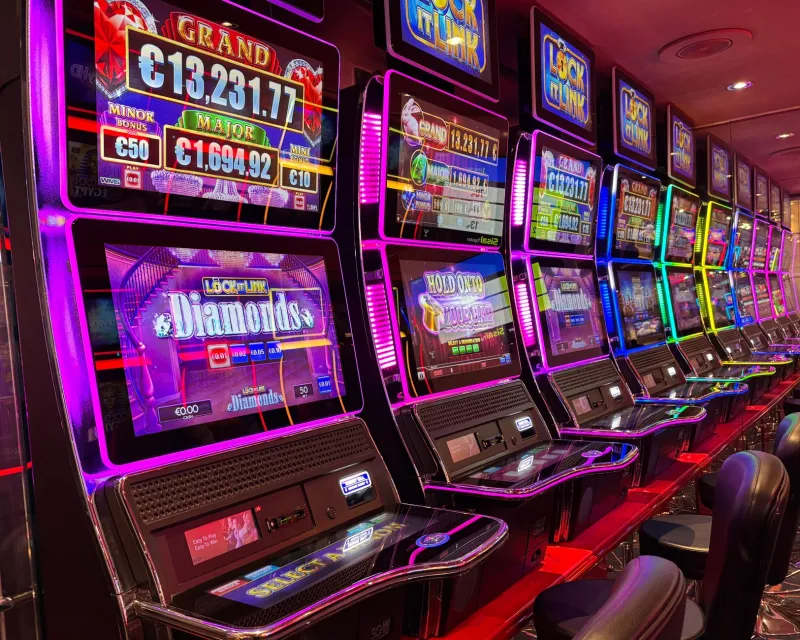
Perhaps no phenomenon in casino psychology is more thoroughly studied — or more commercially significant — than the near-miss effect. In games such as pokies, which remain among the most popular formats for Australian online players, near-misses occur when the symbols on the reels come agonisingly close to a winning combination without completing one.
Research consistently demonstrates that near-misses activate similar reward pathways in the brain as actual wins. The physiological response — elevated heart rate, heightened attention, a surge of anticipatory engagement — closely mirrors the experience of genuine success. This is not a design accident. Game developers have long understood that near-misses sustain player engagement in ways that straightforward losses do not.
The critical misconception that near-misses generate is one of sequential dependency — the intuitive but mathematically unfounded belief that a near-miss brings the next win closer. In reality, each spin on a properly certified random number generator operates in complete independence from the one before it. The machine carries no memory of recent outcomes. A near-miss on spin one hundred has precisely the same relationship to spin one hundred and one as any other preceding result: none whatsoever.
Selective Memory and the Highlight Reel Effect
Ask most regular casino players to estimate their historical win rate, and the figure they produce will almost invariably exceed their actual return. This is not dishonesty — it is a predictable consequence of how human memory functions under conditions of emotional salience.
Wins, particularly unexpected or sizeable ones, are encoded in memory with far greater fidelity than losses. A significant return on a blackjack hand or a bonus round that triggered at just the right moment becomes a story we retell to others and to ourselves. The accumulated weight of smaller, unremarkable losses fades into a vague background impression. Over time, the highlight reel of wins dominates our internal narrative of our own gaming history.
This selective recall creates a compounding effect. A player who genuinely believes they have won more often than they have lost will approach subsequent sessions with a confidence that the numbers do not justify. Their strategy, their staking decisions, and their willingness to extend a session may all be quietly influenced by a record they have unconsciously revised in their own favour.
The Gambler's Fallacy in Australian Context
The gambler's fallacy — the belief that past independent events influence future independent outcomes — remains remarkably persistent despite widespread awareness of its logical flaws. Australian players are no more immune to it than anyone else.
Consider a player at a roulette table who has watched red appear seven consecutive times. The conviction that black is now "overdue" feels almost irresistible. The wheel, of course, has no mechanism for tracking its own history. Each spin resets to the same baseline probabilities. Red and black remain equally likely on the eighth spin as they were on the first.
In online gaming environments, this fallacy sometimes manifests in how players approach betting systems. Martingale-style strategies — doubling stakes after each loss on the assumption that a win must eventually arrive — are frequently employed by Australian players who have absorbed the gambler's fallacy at an intuitive level. While such systems can produce short-term results that appear to validate the approach, they do not alter the underlying house edge, and they carry significant financial risk when losing streaks extend beyond a player's available bankroll.
Why Understanding Bias Matters at the Royal Table
None of this is to suggest that casino gaming cannot be a source of genuine entertainment, excitement, and occasional reward. The games available to Australian players are, at their best, sophisticated, engaging, and capable of producing memorable experiences. The point is rather that the enjoyment derived from those experiences is best sustained when players approach them with accurate expectations.
Recognising the availability heuristic for what it is allows a player to enjoy a jackpot story without treating it as a reliable guide to their own probability of replication. Understanding near-miss mechanics transforms a near-win from a signal of impending success into what it actually is — a product of random variation that carries no predictive weight. Acknowledging selective memory encourages more honest self-assessment of one's own gaming history.
At King Johnnie Casino, the standard we hold ourselves to is one of transparency. The games offered on this platform operate under certified random number generation, with return-to-player percentages published openly and independently verified. Equipping players with the cognitive tools to interpret those figures accurately is, we believe, an extension of the same commitment.
A Clearer Crown
The most sophisticated player at any table is rarely the one who believes fortune is perpetually on the verge of turning in their favour. It is the one who understands the mathematics well enough to enjoy the game for what it genuinely offers — a structured, entertaining encounter with chance — rather than for what wishful thinking suggests it might deliver.
The biases explored here are not character flaws. They are universal features of human cognition, documented across cultures and demographics. What distinguishes the informed player is not immunity to these patterns but awareness of them — the capacity to notice when optimistic instinct is running ahead of probabilistic reality, and to make decisions accordingly.
In the royal court of informed gaming, that awareness is the most valuable asset a player can carry to the table.