Patterns in the Palace: What the Numbers Actually Say About Casino Odds and the Illusions We Chase
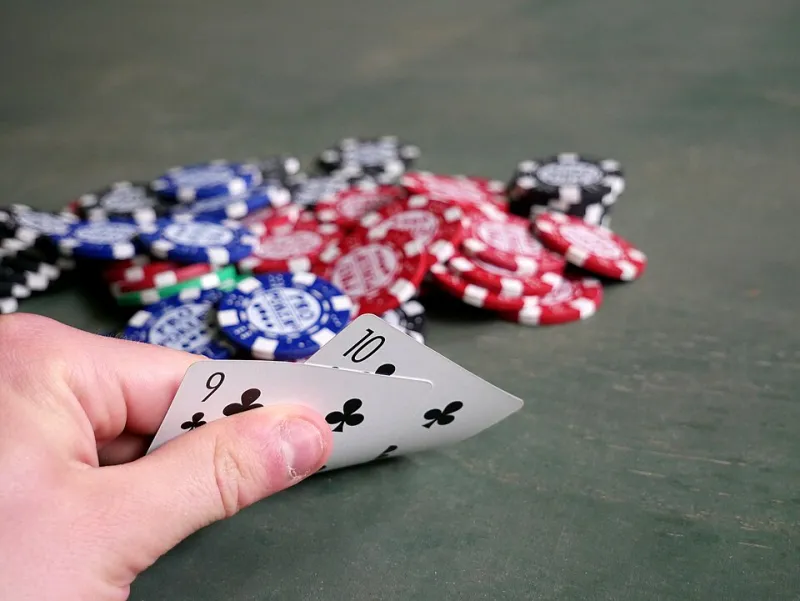
Photo: Santeri Viinamäki, CC BY-SA 4.0, via Wikimedia Commons
There is a particular moment familiar to almost every casino player: the unmistakable feeling that a pattern is emerging. The roulette wheel has landed on red six times consecutively. The poker table has produced three consecutive flushes. The slot machine has not paid out in forty spins. Surely, the logic whispers, something is about to change.
It is not. And understanding precisely why it is not may be the most valuable thing an Australian player can learn before placing their next wager.
The Architecture of Probability
Probability does not carry memory. This is the foundational principle that separates disciplined, informed players from those who surrender their bankroll to cognitive illusion. Each shuffle of a deck, each spin of a reel, each roll of digital dice is a mathematically independent event. The previous outcome exerts no statistical influence whatsoever on what follows.
This concept—known formally as the independence of random variables—sits at the heart of every legitimate casino game. When a standard six-deck blackjack shoe is shuffled, the probability of drawing any given card does not shift based on what appeared in the preceding hand. The mathematics are immutable, and no amount of pattern recognition can alter them.
Yet the appetite for patterns persists. Data from online gaming platforms consistently shows that players adjust their betting behaviour following sequences of losses or wins, despite no rational basis for doing so. This is not a reflection of intelligence; it is a reflection of neuroscience.
Why the Royal Flush Feels Inevitable (But Rarely Is)
Poker occupies a unique position in Australian casino culture—it is simultaneously a game of genuine skill and a breeding ground for probability misconceptions. The royal flush, in particular, has taken on an almost mythological status: the pinnacle hand, the crowning achievement, the moment every player privately anticipates.
The statistical reality is considerably more sobering. In a standard five-card draw format from a single deck, the probability of being dealt a royal flush sits at approximately 1 in 649,740. In Texas Hold'em—arguably the most popular variant among Australian online players—the probability of flopping a royal flush is even more remote.
Nevertheless, players routinely overestimate the likelihood of premium hands. Behavioural economists refer to this as the availability heuristic: when an outcome is vivid, emotionally resonant, or frequently discussed, the brain assigns it a higher probability than the mathematics warrant. The royal flush is discussed constantly, celebrated loudly, and remembered vividly. It therefore feels more probable than it is.
This same mechanism explains why players frequently misread their actual hand strength at the table. A pair of kings feels powerful—and it is a strong holding—but experienced players understand that its equity deteriorates sharply against multiple opponents. The regal hand does not guarantee a regal outcome.
Slot Machines and the Mythology of 'Hot' Reels
If poker is where probability myths find their most sophisticated expression, slot machines are where they find their most widespread one. The belief that a machine which has not paid recently is 'due' for a win is arguably the most pervasive misconception in Australian online gaming.
Modern online slot machines operate through certified Random Number Generators (RNGs), which produce outcomes entirely independent of spin history. Regulatory bodies governing Australian online gaming require that RNG technology meet rigorous certification standards, ensuring that each spin is genuinely random and unconnected to previous results.
The 'due payout' myth persists nonetheless, and it does so for a psychologically fascinating reason. Slot machines are designed with near-miss mechanics—combinations that come tantalisingly close to a winning outcome without delivering one. Research in cognitive psychology demonstrates that near-misses activate the same neural reward pathways as actual wins, reinforcing continued play and sustaining the illusion that success is imminent.
Understanding this mechanism does not diminish the entertainment value of slot play. Rather, it equips players to engage with the experience on their own terms, with clear awareness of what the mathematics dictate.
Streak Thinking and the Gambler's Fallacy
The gambler's fallacy—the belief that a sequence of one outcome increases the likelihood of the opposite outcome—has been documented in casino environments across the globe. It is not unique to Australian players, but local gaming data suggests it manifests with particular frequency in fast-paced online environments, where the volume of decisions per session is significantly higher than in land-based venues.
Interestingly, there exists a mirror phenomenon: the hot hand fallacy. Where the gambler's fallacy predicts reversal, the hot hand fallacy predicts continuation. A player who has won three consecutive hands may genuinely believe they are 'running hot' and increase their stakes accordingly. Neither belief has statistical merit in games of pure chance; both reflect the brain's powerful compulsion to impose narrative structure on random sequences.
Mathematicians who consult with gaming developers describe this as one of the central challenges in responsible design: creating games that are genuinely entertaining without exploiting these cognitive tendencies in harmful ways. The most reputable platforms invest considerably in ensuring their player communications are transparent about the nature of randomness.
Playing with Informed Intelligence
None of this is cause for despair. Understanding probability more accurately does not diminish the thrill of casino gaming—it refines it. A player who comprehends the true odds of each outcome is better positioned to manage their bankroll sensibly, to set realistic expectations, and to derive genuine enjoyment from the experience rather than chasing an illusory certainty.
The most effective approach is one that treats each session as entertainment with a defined budget, rather than an investment with an anticipated return. Games with higher return-to-player percentages offer better long-term value; understanding variance helps players choose games that match their risk tolerance; and recognising cognitive biases in real time allows for more disciplined decision-making.
At King Johnnie Casino, the ethos has always been one of informed, intelligent play. The regal experience is not merely about access to premium games—it is about approaching those games with the knowledge and composure befitting a player who understands the court they are playing in.
The patterns, ultimately, live in our minds. The mathematics live in the machines. Knowing the difference is where genuine mastery begins.