Chasing the Crown: What Drives Australian Players Toward Life-Changing Jackpots

There is a particular moment that every seasoned online casino player knows intimately — that suspended breath between the final reel settling and the screen resolving into either triumph or silence. It lasts perhaps half a second. Yet within that half-second, the human brain performs an extraordinary act of anticipation, flooding itself with neurochemical signals that rival those produced by some of the most intense experiences life has to offer. For millions of Australian players, that moment is not merely a feature of casino gaming. It is, in many respects, the entire point.
Understanding why players pursue life-changing jackpots — often with full knowledge of the mathematical improbability involved — requires looking well beyond simple notions of greed or irrationality. The answer lies in the architecture of the human mind itself, and in the particular way that Australian gaming culture has come to mythologise the extraordinary win.
The Neurochemistry of Anticipation
Dopamine is frequently cited in conversations about gambling psychology, and for good reason. This neurotransmitter, central to the brain's reward system, does not spike primarily in response to winning. Research consistently demonstrates that dopamine activity peaks during the anticipation of a reward — particularly when the outcome is uncertain. In practical terms, this means the brain derives its most potent chemical reward not from the jackpot itself, but from the seconds before it is revealed.
Progressive jackpot slots are engineered, whether by design or fortunate accident, to exploit this mechanism with remarkable precision. The accumulating prize counter, visible and climbing with every spin across a network of players, creates a persistent low-level anticipatory state. Each spin is not merely a gamble; it is a fresh invitation to imagine a different life. The brain responds accordingly, and the cycle reinforces itself.
This is what behavioural scientists sometimes refer to as variable ratio reinforcement — the same psychological principle that makes certain activities so difficult to disengage from. When rewards arrive unpredictably, the motivation to continue is paradoxically stronger than when they arrive on a fixed schedule. A player who wins occasionally, and cannot predict when, is neurologically primed to persist far longer than one who wins regularly.
Why the Odds Rarely Change the Behaviour
One of the more counterintuitive findings in gambling psychology research is that clearly communicated odds have a surprisingly modest effect on player behaviour when a jackpot is sufficiently large. Australian players, by and large, are not uninformed about probability. Many can articulate, with reasonable accuracy, just how remote the chances of a multi-million-dollar progressive payout actually are.
And yet they spin.
The explanation here involves a cognitive phenomenon known as probability neglect — the tendency for human decision-making to treat very small probabilities as functionally equivalent to zero or, conversely, to treat them as more meaningful than they rationally should be when the potential payoff is emotionally significant. When a jackpot reaches seven figures, the brain does not process the odds in the same dispassionate way it might evaluate, say, the chance of rain on a Tuesday afternoon.
The scale of the potential outcome overwhelms the rational calculus. A one-in-ten-million chance of winning five million dollars is mathematically trifling, but psychologically, it is a door that remains open. And open doors, for most human beings, are very difficult to walk away from.
The Mythology of the Major Win
Australian casino culture has developed a rich, if informal, mythology around transformative wins. Stories circulate — through social media, gaming forums, and word of mouth in pubs and workplaces — of ordinary people whose circumstances were altered overnight by a fortunate spin or a perfectly timed hand. These stories are not fabricated, but they are curated. The wins are memorable precisely because they are exceptional, and their exceptionality is exactly what gives them cultural weight.
This mythology performs an important psychological function. It converts an abstract statistical possibility into something that feels concrete and proximate. When a player hears that someone from suburban Brisbane or regional Victoria walked away with a six-figure sum, the geographic and cultural familiarity of that story makes the outcome feel achievable in a way that raw probability never could. The brain registers not 'this happened to one person in millions' but rather 'this happened to someone like me.'
For the online casino industry in Australia, these stories are powerful precisely because they are true. They require no embellishment. The challenge — and the responsibility — lies in ensuring that players engage with these narratives as inspiring anomalies rather than reliable expectations.
High-Stakes Games and the Illusion of Skill
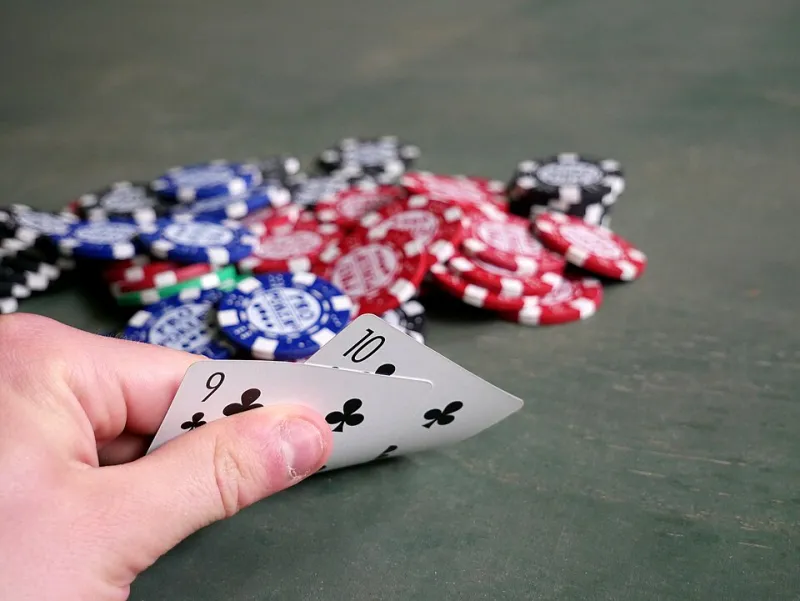
The jackpot psychology that governs progressive slots has a distinct cousin in the realm of high-stakes table games. Players drawn to high-limit blackjack, baccarat, or poker often operate under a different but equally compelling cognitive framework: the belief that skill, strategy, or accumulated experience can meaningfully shift the odds in their favour.
For games like poker, this belief has genuine foundation. For others, it is more complex. The point is that the pursuit of large wins through table games frequently involves a sense of agency that slot play does not. Players feel, rightly or wrongly, that they are participants in their outcome rather than passive observers. This perceived control is itself a powerful motivator, capable of sustaining engagement even through extended losing runs.
The psychological literature refers to this as the illusion of control — a well-documented cognitive bias in which individuals overestimate their influence over chance-determined outcomes. In a casino context, rituals, strategies, and pattern recognition all serve to reinforce this illusion, making the pursuit of the big win feel like a project rather than a lottery.
Rare Success and Responsible Engagement
None of this analysis is intended to diminish the genuine excitement that jackpot pursuit can offer when approached with clear-eyed awareness. The dream of a life-changing win is not inherently problematic — it is a deeply human aspiration, and the entertainment value of that aspiration is real and legitimate.
What matters is the framework within which that pursuit takes place. Players who set firm session limits, who treat jackpot play as a form of entertainment rather than a financial strategy, and who maintain honest self-awareness about the odds are engaging with one of the more thrilling aspects of online gaming in a manner that is both sustainable and genuinely enjoyable.
At King Johnnie Casino, we believe that understanding the psychology behind the games you play is not a dampener on the experience — it is what elevates casual entertainment into something more sophisticated. Knowing why the anticipation feels electric, why the odds feel conquerable, and why the stories of winners resonate so deeply does not diminish the thrill. If anything, it sharpens it.
The crown, after all, is most meaningful to those who understand what it takes to wear it wisely.