More Than a Face Behind the Cards: How Live Dealers Are Reshaping Australian Player Loyalty
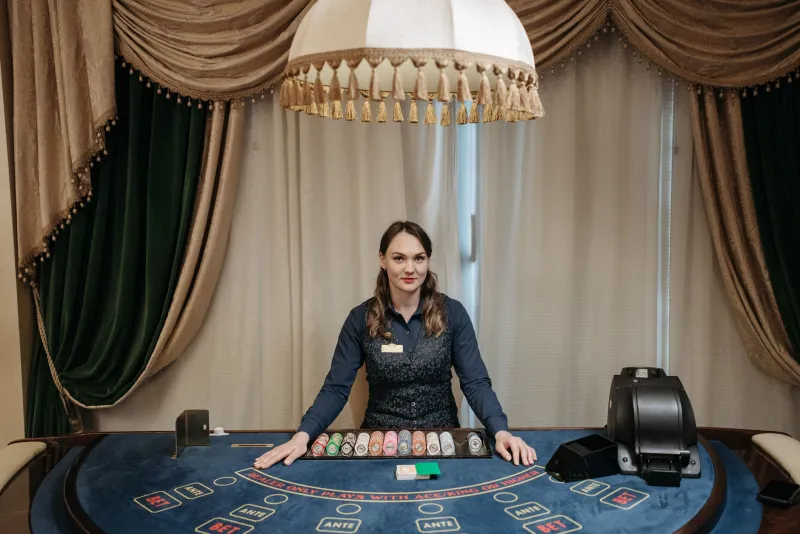
For much of online casino history, the dealer was an afterthought — a digital avatar, an animated hand, a random number generator dressed in a tuxedo. That era is drawing to a close. Across Australia's premium gaming platforms, live dealers have graduated from background fixtures into something considerably more significant: trusted personalities whose presence actively shapes where players spend their time and, by extension, their money.
This is not merely an aesthetic shift. It is a structural change in the psychology of player engagement, one that carries real consequences for how loyalty is built, how sessions are extended, and how casinos differentiate themselves in an increasingly crowded marketplace.
The Parasocial Bond and Why It Matters at the Table
Psychologists have long studied parasocial relationships — those one-sided emotional connections people form with public figures, television hosts, or media personalities. The viewer invests emotional energy; the subject remains largely unaware. For decades, this dynamic was confined to broadcast media. Then live streaming arrived, and suddenly the phenomenon migrated into interactive environments.
Live casino tables function as a particularly fertile ground for parasocial connection. Unlike a television presenter, a live dealer responds directly to player messages, acknowledges returning visitors by name where platform tools allow, and maintains a consistent persona across hundreds of sessions. The result is something that feels meaningfully different from passively watching a screen — players develop a sense of genuine familiarity, even kinship, with dealers they have never physically met.
For Australian players, who tend to place considerable cultural value on warmth, directness, and a good sense of humour, this dynamic is especially pronounced. A dealer who handles a bad run of cards with a disarming quip, or who celebrates a player's win with authentic enthusiasm rather than scripted congratulation, is not simply performing a service. They are building a relationship — one that players return to seek out.
Personality as a Commercial Force
The implications for casino operators extend well beyond warm feelings. Research into streaming behaviour and interactive media consistently demonstrates that personality-driven platforms retain audiences longer and at higher rates than content-only alternatives. The same principle applies with remarkable consistency to live casino environments.
When a player develops a preference for a particular dealer — their cadence, their energy, the way they handle the shoe — that preference becomes a retention mechanism that no loyalty points programme or bonus structure can fully replicate. Players will schedule their sessions around a favourite dealer's shift. They will seek out specific table variants not because of the rules or the RTP, but because of who is hosting the game.
This represents a profound departure from how casino value was traditionally measured. Return-to-player percentages, house edge calculations, and bonus wagering requirements remain important benchmarks. But they capture nothing of the emotional arithmetic a player performs when deciding whether to open a table at ten o'clock on a Tuesday evening. That decision is increasingly driven by the answer to a deceptively simple question: is my dealer on tonight?
The Craft Behind the Charisma
It would be a mistake to reduce what skilled live dealers do to mere likability. The best practitioners in the field combine genuine interpersonal warmth with a sophisticated understanding of pacing, tension management, and crowd psychology — skills that take considerable time and experience to develop.
Consider the management of a losing streak. An inexperienced dealer might maintain polished neutrality, which is technically correct but emotionally hollow. A skilled dealer understands how to hold the energy of a table steady during difficult runs — maintaining levity without trivialising losses, keeping conversation alive without becoming intrusive, and signalling through body language and tone that the game remains worth playing. This is not manipulation; it is craft.
Similarly, the handling of significant wins requires nuance. Authentic celebration is infectious and memorable. Performative enthusiasm is immediately detected and quietly resented. Players who have spent meaningful time at live tables develop a finely calibrated sense for the difference, and their loyalty tracks accordingly.
Australia's Appetite for Authenticity
Australian culture has a well-documented allergy to pretension. The national character prizes straight-talking, self-deprecating humour, and the kind of unpretentious competence that does not need to announce itself. These values travel into gaming preferences with considerable force.
Australian players are, on the whole, discerning consumers of personality. They respond warmly to dealers who are genuinely engaging and cool noticeably toward those who are performing engagement. This creates a quality-filtering dynamic that rewards platforms willing to invest seriously in their dealer talent — and gently punishes those who treat the role as interchangeable.
At King Johnnie Casino, the cultivation of a live dealer roster is approached with the same deliberateness applied to game selection and platform design. The underlying philosophy holds that a premium gaming experience cannot be assembled from technical components alone. The human element — the voice, the presence, the personality behind the camera — is not supplementary to the product. In many meaningful respects, it is the product.
When Trust Becomes the Table Stake
There is a deeper dimension to the dealer-player relationship that deserves careful consideration: trust. In an environment where players are staking real money and where the mechanics of chance can feel opaque, the presence of a familiar, credible human figure carries genuine psychological weight.
A trusted dealer does not merely make the experience more enjoyable. They make it feel safer — not in the sense of altering odds, but in the sense of creating an environment where players feel seen, respected, and confident that the game is being conducted with integrity. This perception of fairness, mediated through personality, is extraordinarily difficult to manufacture artificially and extraordinarily valuable once established.
For Australian players navigating an online casino landscape that can occasionally feel anonymous and transactional, the emergence of genuinely trusted dealer personalities represents something worth acknowledging: a meaningful humanisation of a digital medium.
Looking Forward
As live casino technology continues to mature — with higher-definition streams, more sophisticated player-dealer interaction tools, and increasingly personalised table environments — the dealer's role will only grow in strategic importance. Platforms that treat their dealer talent as a core asset, investing in development, scheduling, and experience, will find themselves with a competitive advantage that is genuinely difficult to replicate.
Return-to-player statistics can be matched. Bonus structures can be copied. Personalities cannot be cloned.
For Australian players, the message is already being received. The question of which table to sit at is no longer answered by odds alone. Increasingly, it is answered by the face behind the cards — and whether that face belongs to someone worth spending an evening with.