The Dealer in the Room: How Live Casino Psychology Distorts Poker Hand Judgement for Australian Players
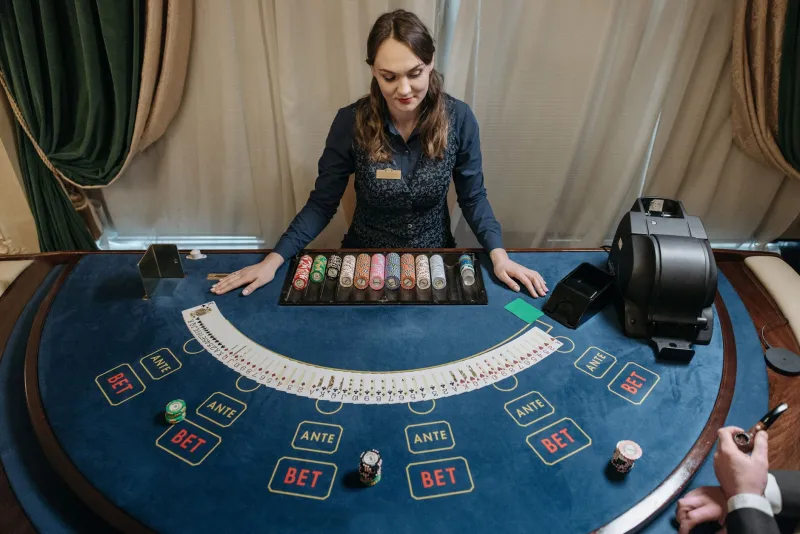
There is a particular moment familiar to anyone who has played live dealer poker online: the camera pans slightly, the dealer's expression remains professionally neutral, and somewhere in the back of the player's mind, a quiet conviction forms — I've got the measure of this table. It feels like insight. More often, it is illusion.
For Australian players navigating the growing landscape of live casino gaming, this psychological phenomenon carries real financial consequences. The social dimension of live dealer play — so compelling, so immersive — introduces a suite of cognitive distortions that have no equivalent in standard digital poker variants. Understanding how these distortions operate is not merely an academic exercise. It is, for the discerning player, a matter of protecting both their bankroll and their judgement.
When a Human Face Rewrites the Odds
At its core, the problem begins with the human brain's extraordinary sensitivity to social information. Humans are wired to read faces, interpret micro-expressions, and assign meaning to gesture and tone. This capacity serves us well in everyday life. At a live dealer poker table, it becomes a liability.
The dealer, by professional design and rigorous training, presents a consistent, neutral demeanour. Their role is procedural: shuffle, deal, manage the table, and maintain the integrity of the game. They are not participants in the strategic contest. Yet many players unconsciously treat them as though they are — scanning for signs of hesitation, reading a slight smile as confirmation of a strong board, or interpreting a brisk dealing motion as evidence of a weak hand distribution.
This misattribution of meaning to neutral behaviour is known in cognitive psychology as the social cue bias. In live dealer environments, it operates with particular force because the stimulus — a real human being on screen — is so much more compelling than a digital animation or a random number generator interface.
The Confidence That Comes From Being Watched
There is a second, subtler dynamic at play. In live dealer games, players are, in a meaningful sense, performing. The chat function is open. Other players may be present at the same virtual table. The dealer acknowledges bets and responds to actions in real time. This audience effect — even a modest one — tends to inflate player confidence.
Research into social facilitation suggests that the presence of others, even passively, can increase arousal and encourage bolder behaviour. In a poker context, this translates to players overcommitting to hands they might fold with quiet deliberation in a solo digital session. A marginal holding — a middle pair, a speculative draw — becomes, in the glow of the live table, something that feels worth pressing.
Several experienced live dealer professionals, when asked about common player tendencies, note a consistent pattern: players in live formats tend to call more frequently than the mathematics of their hand position would recommend. The social energy of the room, even a virtual one, makes folding feel like a public admission of weakness rather than a sound strategic decision.
The Myth of the Human Tell
Perhaps the most persistent misconception among Australian live dealer poker players is the belief that a real human dealer — as opposed to an algorithm — can be read for informational advantage. This belief is not entirely without foundation in physical casino settings, where a dealer's inadvertent behaviour might occasionally reveal information about the deck. In a professional online live dealer environment, however, it is almost entirely unfounded.
Live dealers at reputable platforms are trained specifically to maintain consistency across all hands, regardless of card values. They are evaluated on their ability to suppress involuntary variation in expression, pacing, and manner. The tells that players believe they are detecting are, in the vast majority of cases, projections — the brain finding patterns in genuinely random behaviour because it is primed to look for them.
This is a cousin of the gambler's fallacy, but operating in a social rather than numerical register. Just as players sometimes convince themselves that a roulette wheel is 'due' for red after a sequence of black, they convince themselves that a dealer's slight pause before revealing the flop carries strategic intelligence. It almost certainly does not.
How Social Context Inflates Hand Valuation
Beyond the dealer relationship itself, the broader social context of live play affects how players evaluate their own holdings. In a standard digital poker game, hand assessment tends to be more clinical. The player, alone with their screen, is more likely to consult pot odds, consider position, and weigh the mathematical case for or against a given action.
In a live dealer session, the social tempo of the game introduces time pressure and emotional contagion. When another player at the table is visibly aggressive — raising quickly, using the chat function to project confidence — others frequently recalibrate their own hand valuations upward in response. A hand that might be assessed as a cautious call in a quiet digital session becomes, in the charged atmosphere of a live table, something that feels like a genuine contender.
This recalibration is rarely conscious. Players do not think to themselves, I am overvaluing my hand because the table energy is high. They simply feel more confident — and act accordingly.
Restoring Clarity at the Live Table
None of this is an argument against live dealer poker. The format is genuinely engaging, and for many Australian players it represents the most enjoyable way to experience the game online. The social dimension that creates these distortions is also the dimension that makes live play compelling and distinctive.
The corrective is not avoidance but awareness. Players who understand the specific psychological pressures of the live environment are better positioned to separate their authentic hand assessment from the noise generated by social context. A few practical approaches are worth considering.
First, treat the dealer as the neutral procedural figure they are designed to be. No information about your hand's strength can be reliably extracted from their behaviour. Directing analytical energy toward the dealer is energy withdrawn from genuine strategic thinking.
Second, apply the same hand evaluation framework you would use in a digital session, regardless of the social atmosphere at the table. If a hand would be a fold in a quiet solo session, the live table's energy does not change its mathematical merit.
Third, be especially vigilant during moments of heightened table activity — heavy betting, animated chat, fast-paced rounds. These are precisely the conditions under which social facilitation effects are strongest, and under which hand overvaluation is most likely to occur.
Playing With a Steady Crown
The finest poker players — whether seated in a Melbourne card room or logged into a live dealer session from the comfort of home — share a capacity for emotional detachment from the social environment of the game. They appreciate the atmosphere without being governed by it.
For Australian players who take their live dealer poker seriously, developing that same quality of detachment is among the most valuable investments they can make. The cards speak in mathematics. The dealer speaks in procedure. The table speaks in theatre. Knowing which voice to heed — and when — is the mark of a player who wears their crown with genuine authority.