Dazzled by Diamonds: How the Allure of Rare Hands Warps Risk Judgement for Australian Poker Players
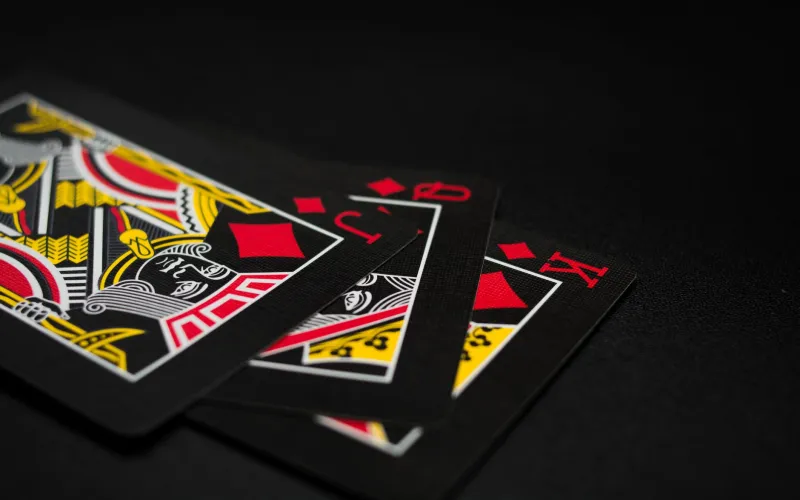
There is something undeniably theatrical about a royal flush. The ten, jack, queen, king, and ace of a single suit — arranged in perfect sequence — represents poker's highest honour. It is the hand that appears in films, adorns casino branding, and occupies a near-mythical place in the imagination of card players across Australia. At King Johnnie Casino, we celebrate the grandeur of exceptional gaming moments. But we also believe that genuine players deserve honest insight into how that grandeur can, at times, lead their judgement astray.
Because here is the uncomfortable truth: the royal flush, for all its magnificence, occurs in roughly one in every 649,740 hands of five-card poker. And yet its influence over how Australian players think, bet, and manage their bankrolls is wildly disproportionate to that statistical reality.
When the Spectacular Becomes the Expected
Cognitive psychologists use the term availability heuristic to describe a mental shortcut in which people estimate the likelihood of an event based on how easily an example comes to mind. Vivid, emotionally charged events are recalled with far greater ease than mundane ones — and few things in a casino setting are more vivid than hitting a royal flush.
A player who has witnessed this hand — whether in person, on a streaming platform, or in a memorable film scene — carries that image with them into every subsequent session. The memory is bright, emotionally resonant, and deeply encoded. As a result, the brain begins to treat the event as more probable than it actually is. The hand feels achievable. It feels like something that happens to people like them.
This is not a character flaw. It is simply how human memory and probability assessment interact — and it happens to experienced players just as readily as it happens to beginners.
The Bankroll Distortion Effect
The consequences of overestimating rare hand probabilities are not merely theoretical. They manifest in concrete, measurable ways across a player's session.
Consider the Australian player who enters a video poker game with a modest bankroll and a clear strategy. Three hands in, they are dealt four cards to a royal flush — a tantalising near-miss. The rational play may well be to hold those four cards and draw, but the problem arises when this near-miss begins to anchor the player's entire session around the pursuit of completion.
Suddenly, hands that would ordinarily be played for their immediate expected value are evaluated through a different lens. Lower-value but far more achievable combinations — two pairs, three of a kind, a straight — are dismissed as consolation prizes. The player is no longer optimising for overall expected return. They are chasing a crown that statistically speaking, may never arrive.
This shift in focus is subtle but consequential. It can lead to extended sessions beyond planned time limits, increased bet sizing justified by the perceived proximity of a major win, and a fundamental misalignment between risk tolerance and actual wagering behaviour.
Why Rare Events Command Outsized Attention
The psychological literature on this subject is extensive, but the practical explanation is relatively straightforward. Human beings are wired to notice and remember outliers. In ancestral environments, extreme events — storms, predators, floods — demanded immediate attention and long-term memory. The brain developed to treat rare but impactful occurrences as highly informative signals.
In a modern casino context, this same wiring causes players to assign disproportionate weight to low-probability, high-reward outcomes. The royal flush is precisely the kind of event that triggers this response: it is rare, it is dramatic, and it carries significant reward. The brain files it under important — and thereafter treats its probability as higher than the mathematics actually support.
For Australian players who engage with poker regularly, this effect compounds over time. Each near-miss reinforces the sense that the hand is within reach. Each witnessed jackpot strengthens the emotional case for continued pursuit. The statistics, meanwhile, remain unmoved.
The Opportunity Cost of Chasing Crowns
What makes this distortion particularly costly is not just the money spent in direct pursuit of rare hands — it is the strategic opportunity cost incurred along the way.
In any well-structured poker session, the cumulative return across hundreds of achievable hands will almost always outweigh the theoretical value of a single rare event, especially when that rare event requires suboptimal play to pursue. A player who consistently holds four cards to a royal flush while discarding a guaranteed paying combination is making a mathematically inferior decision, regardless of how it feels in the moment.
The irony is that the royal flush, when it does appear, tends to arrive unexpectedly — not as the product of dogged pursuit, but as a genuine statistical anomaly that rewards a player who was already playing sound, disciplined poker. The crown rarely goes to those who chase it most desperately.
Recalibrating the Royal Standard
None of this is to suggest that rare hands should be ignored or that the excitement surrounding them is somehow misplaced. At King Johnnie Casino, we understand that the possibility of an extraordinary outcome is part of what makes premium gaming compelling. The thrill of the exceptional is woven into the fabric of the experience.
The distinction worth drawing, however, is between appreciating rare outcomes and planning for them. A player who understands the true probability of a royal flush — and who has genuinely internalised what one in 649,740 means across a realistic session — can still enjoy the excitement of a near-miss without allowing it to derail their broader strategy.
Practical recalibration begins with session planning. Establishing clear expectations about the likely range of outcomes before play commences — based on achievable hands rather than exceptional ones — provides a rational anchor when in-session excitement begins to pull in another direction.
It also helps to actively track the hands you are actually dealt across multiple sessions. The data, accumulated honestly over time, tends to be a far more effective corrective than any amount of theoretical instruction. Seeing the numbers laid out plainly has a way of quietly dissolving the mythology that memory and emotion have constructed.
Playing with a Clear Crown
The royal flush will always occupy its rightful place at the pinnacle of poker's hierarchy. It is a genuinely extraordinary outcome, and when it arrives, it deserves every moment of celebration it receives. But the discerning Australian player — the kind who approaches the table with both passion and discipline — understands that the game is won or lost not in those rare transcendent moments, but across the long, unglamorous accumulation of well-played hands.
The most regal approach to poker is not the one that fixates on the highest possible prize. It is the one that maintains clarity of judgement regardless of what the previous hand delivered — and regardless of what the next one promises. That, in the end, is what separates a player who merely dreams of wearing the crown from one who has genuinely earned it.