Crowned by the Crowd: How Social Proof and FOMO Manipulate Australian Casino Decision-Making

There is a particular kind of pressure that has nothing to do with the cards on the table or the spin of a reel. It arrives quietly, carried by a notification, a live leaderboard update, or a streaming chat erupting with celebration. It whispers that everyone else is winning — and that you are the only one sitting on the sideline.
For Australian online casino players, this pressure has a name: social proof. And its influence on gambling behaviour is considerably more powerful than most players recognise in the moment.
What Social Proof Actually Means in a Casino Context
Social proof is a psychological principle first articulated by American researcher Robert Cialdini in the 1980s. In its simplest form, it describes the human tendency to interpret the actions of others as evidence of correct behaviour. If a crowd is moving in one direction, the instinct is to follow — because surely they know something you do not.
In commercial environments, social proof is deployed deliberately and effectively. Restaurants display queues. Retailers advertise bestseller lists. Online platforms show real-time purchase notifications. The underlying message is always the same: others are choosing this, and you should too.
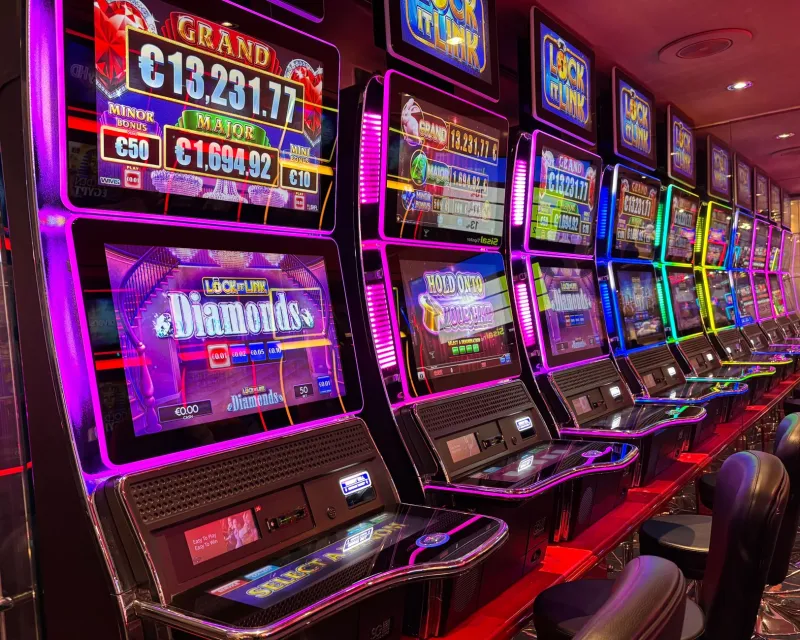
In the context of Australian online casinos, social proof takes several forms. Live jackpot tickers display names and prize amounts in real time. Tournament leaderboards rank players publicly. Streaming platforms broadcast individual sessions to audiences of thousands. Community forums celebrate wins with screenshots and timestamps. Each of these mechanisms is, at its core, a social proof signal — and each one carries consequences for the players who receive it.
The Neuroscience Behind Watching Someone Else Win
When a person observes another individual receiving a reward, the brain's dopaminergic system activates in ways that partially mirror the experience of receiving the reward directly. Neuroscientific research has documented this vicarious reward response consistently across different populations and contexts.
For casino players watching a live stream or monitoring a leaderboard, this means that someone else's jackpot triggers a mild but genuine neurological response in the observer. The brain registers the event as proximate — close enough to feel relevant — and begins recalibrating its assessment of probability accordingly.
This is where the distortion begins. The observer's brain does not process the statistical independence of each game session. It does not account for the fact that the streamer's win bears no mathematical relationship to the observer's own session. Instead, it files the information as evidence that winning is currently happening, that the environment is fertile, and that now may be the time to act.
In practical terms, this often translates to increased bet sizes, extended sessions, and a reduced sensitivity to personal losses — all because the player's risk perception has been unconsciously recalibrated by someone else's outcome.
FOMO: The Fear That Costs Real Money
Fear of missing out — FOMO — is not a trivial concept. In gambling research, it functions as a genuine cognitive distortion that compromises decision-making quality in measurable ways.
Australian players are particularly susceptible to FOMO-driven behaviour during limited-time tournaments, progressive jackpot accumulation periods, and promotional events that display countdown timers or participant numbers. The combination of artificial scarcity and social visibility creates a pressure environment in which players frequently abandon their pre-established limits.
Consider the mechanics of a live leaderboard tournament. A player who set a session budget of $100 reaches that limit and prepares to stop. They glance at the leaderboard and see that three other players — all of whom joined the tournament at a similar time — are currently positioned in prize-paying ranks. The rational calculation says: stop, your budget is exhausted. The social proof signal says: they kept going, and it worked.
The gap between those two messages is where FOMO operates. And in that gap, a significant proportion of Australian players choose to continue.
The Invisibility of Losses in Social Casino Environments
One of the most structurally significant features of social proof in casino contexts is its profound asymmetry. Wins are announced, celebrated, shared, and displayed. Losses are private, quiet, and invisible.
A live jackpot ticker does not display the number of players who wagered without success in the same period. A tournament leaderboard does not show the players who dropped out after exceeding their budgets. A streaming channel does not broadcast the sessions that ended in deficit.
This creates a systematically distorted picture of the casino environment — one in which success appears far more common than it statistically is. Australian players consuming this information are not receiving an accurate representation of outcomes. They are receiving a curated highlight reel, and their risk assessments are being shaped accordingly.
Research into availability bias — the tendency to judge the likelihood of events based on how easily examples come to mind — suggests that the prominence of visible wins makes those wins feel more probable than they are. The player who has recently watched three jackpot celebrations on a live stream will unconsciously assign a higher probability to their own jackpot than the mathematics warrant.
Practical Safeguards for the Discerning Australian Player
Understanding the mechanism does not automatically neutralise it. Social proof and FOMO are not character flaws — they are deeply embedded cognitive tendencies that evolved for good reasons in non-gambling contexts. Recognising them, however, creates the space for deliberate counter-strategies.
First, establish session parameters before exposure to social casino environments. Decide on time limits, budget limits, and exit conditions prior to opening a leaderboard or streaming platform. Written commitments are more resistant to in-session pressure than mental ones.
Second, develop the habit of asking a clarifying question when you feel the pull of social proof: Is this person's outcome mathematically connected to mine? The answer is always no. Each game session is statistically independent. Another player's jackpot is not evidence that yours is approaching.
Third, be conscious of the information asymmetry in social casino environments. For every win you see displayed, there are many losses that are never shown. Adjust your mental model of the environment accordingly.
Finally, if tournament structures or live streams consistently trigger the impulse to exceed your limits, it is worth considering whether these features belong in your regular casino experience at all. Responsible engagement means choosing the format that supports your own decision-making quality — not the one that most effectively undermines it.
The Royal Standard of Self-Governance
At King Johnnie Casino, the standard we hold for our players is one of informed, deliberate engagement. The social dimensions of online gaming — the community, the competition, the shared excitement — are genuine sources of entertainment. They become problematic only when they override individual judgement.
The crowd is not always right. In a casino environment, the crowd is often invisible, its losses unannounced and its patterns misrepresented. The player who governs their own session with discipline and clear-eyed awareness of these dynamics is the one who genuinely plays on their own terms.
That is the standard worth holding — regardless of what the leaderboard says.